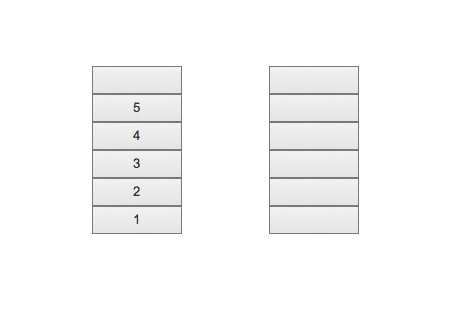
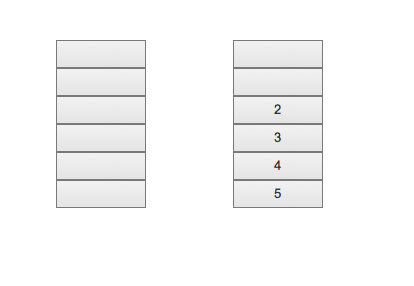
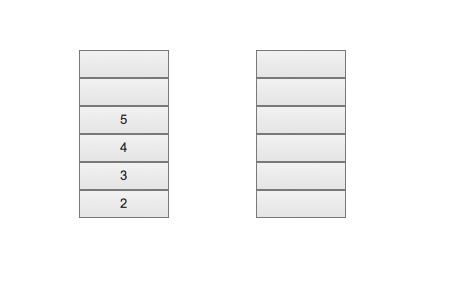
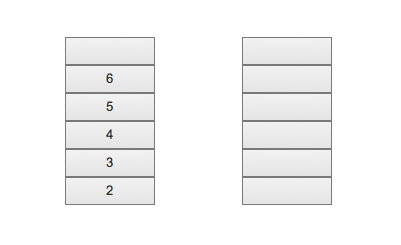
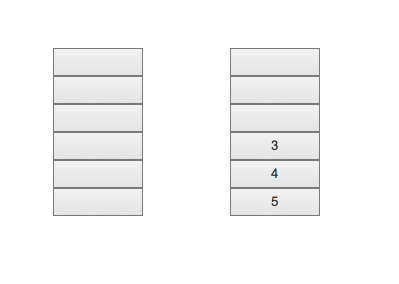
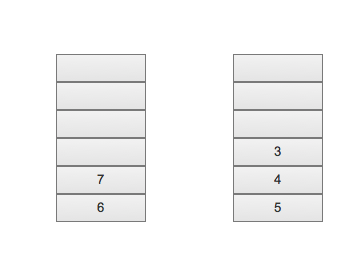
Implement the following operations of a queue using stacks.

push(x) -- Push element x to the back of queue.
pop() -- Removes the element from in front of queue.
peek() -- Get the front element.
empty() -- Return whether the queue is empty.
Notes:
You must use only standard operations of a stack -- which means only push to top, peek/pop from top, size, and is empty operations are valid.
Depending on your language, stack may not be supported natively. You may simulate a stack by using a list or deque (double-ended queue), as long as you use only standard operations of a stack.
You may assume that all operations are valid (for example, no pop or peek operations will be called on an empty queue).
publicclassImplementQueueusingStacks_232 { Stack<Integer> s1 = newStack<Integer>(); Stack<Integer> s2 = newStack<Integer>(); /** Push element x to the back of queue. */ publicvoidpush(int x) { s1.push(x); } /** Removes the element from in front of queue and returns that element. */ publicintpop() { if(s2.isEmpty()){ while(!s1.isEmpty()){ s2.push(s1.pop()); } } return s2.pop(); } /** Get the front element. */ publicintpeek() { if(s2.isEmpty()){ while(!s1.isEmpty()){ s2.push(s1.pop()); } } return s2.peek(); } /** Returns whether the queue is empty. */ publicbooleanempty() { return s1.empty() && s2.empty(); } }